
Análise do Índice Amazon Puzzle
No âmbito do projeto “NORAD Amazon - Solucionando o quebra-cabeças da Amazônia: sem desmatamento, mais produção e direitos”, há uma das metas no outcome 5 em que buscase a promoção do desenvolvimento de jurisdições sustentáveis na Amazônia, com foco na redução de...


Pegada de carbono dos gastos tributários
O livro apresenta três estudos e tem como objetivo contribuir para o debate em torno da "pegada" de carbono política tributária brasileira e para a formulação de incentivos econômicos ao desenvolvimento sustentável.

The Interim Forest Finance Facility (IFFF) Scoping Study: Briefing Note
There is currently no financial mechanism that will pay for medium to long-term emissions reductions from REDD+ in the period between 2015 and 20201 (‘the interim period’), and do so at the scale needed to meet emissions reduction targets in tropical forest...

Código Florestal: Incentivos Econômicos – Artigo 41
Apresentação feita pelo IPAM em seminário realizado em Belém em outubro de 2013.

Povos indígenas e o mecanismo de redução de emissões por desmatamento e degradação florestal (REDD+) na Amazônia brasileira
Almeja-se que as informações condidas neste trabalho contribuam para a construção de um sistema justo e equitativo de repartição de potenciais benefícios de iniciativas de REDD+ que seja voltado para o desenvolvimento dos povos indígenas e de suas organizações.
Ecosystem productivity and carbon cycling in intact and annually burnt forest at the dry southern limit of the Amazon rainforest (Mato Grosso, Brazil)
Background: The impact of fire on carbon cycling in tropical forests is potentially large, but remains poorly quantified, particularly in the locality of the transition forests that mark the boundaries between humid forests and savannas. Aims: To present the first...
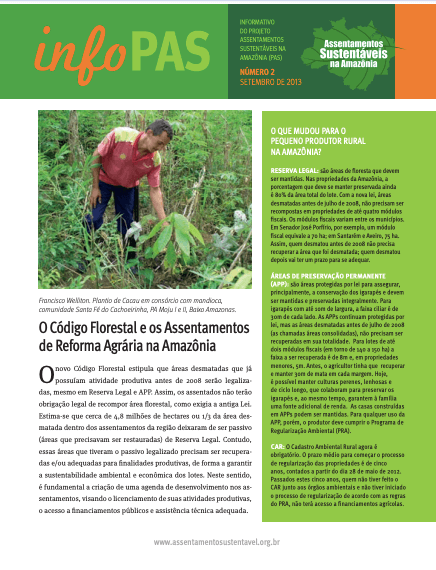
InfoPAS 2: O Código Florestal e os Assentamentos de Reforma Agrária na Amazônia
InfoPAS - Número 2 - Ano 1 - Informativo do Projeto Assentamentos Sustentáveis na Amazônia (PAS). Brasília. 2013.